
From our pantry · Krawan
What is Thai cardamom?
Thai cardamom is the whole dried fruit of Wurfbainia testacea, sold as seed-filled pods with a powerful, cool, camphor-like aroma.
A small, pale pod. Dark seeds inside. Crack one open and the aroma makes quite an introduction.

The first surprise is the scent
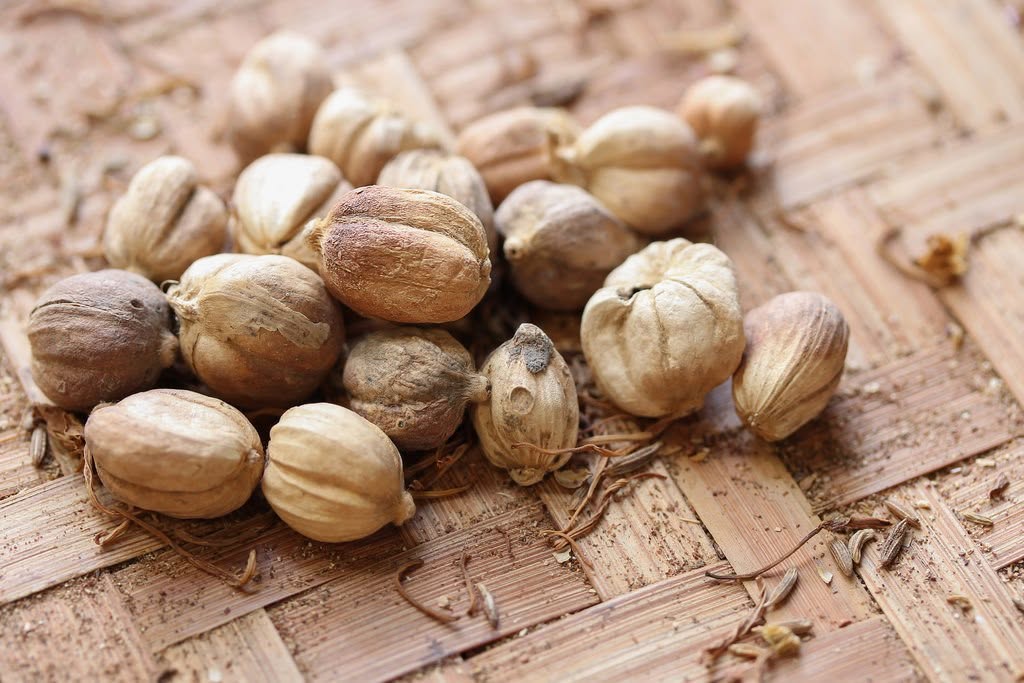
Thai cardamom is the dried fruit of Wurfbainia testacea, a plant in the ginger family. You may see these pods sold as white cardamom, or called Siam cardamom or krawan (กระวาน). The whole pods hold clusters of dark, angular seeds.
Gently crush a few of those seeds and the scent is immediate: cool, eucalyptus-like, peppery and surprisingly powerful. To us, it is almost heady — the kind of aroma that makes you stop and smell it again.
If cardamom usually means sweet buns or coffee to you, this is a different starting point. Think of a slowly cooked meat stew, a fragrant broth or a rich curry. There is another side to cardamom worth getting to know.
Is it the same as green cardamom?
No. Green cardamom is Elettaria cardamomum, a different species. Its familiar character tends towards sweet and floral; Thai cardamom brings a cooler, more camphor-like note. That is a description of its natural aroma, not an added ingredient.
The pale, rounded pods also look different from the elongated green ones. Our Thai cardamom comes from Chanthaburi Province in Thailand and is supplied as whole dried pods, with the seeds inside. You may encounter the botanical synonym Amomum testaceum on older labels or in reference books.
What does Thai cardamom taste like?
We use Thai cardamom in meat stews and bone broths. It gives a familiar pot a different aromatic direction: something cool and lifted against the richness of the meat. A little goes a long way; the aim is a fragrant background, not a pot that tastes of nothing else.
Here are three places to explore it:
- Meat stews and braises. Try it in a dish you already know well, so the new aroma is easy to notice. Cinnamon or coriander can sit alongside it without making the seasoning complicated.
- Bone broths and noodle soups. A lightly cracked pod lets you explore the flavour in the liquid itself. Taste as it infuses rather than adding a generous handful at the start.
- Rich curries. Thai cardamom is worth exploring in massaman-style cooking, where its aroma joins the warmth of the other spices and the richness of coconut milk.
How to use Thai cardamom: crack, simmer, taste
You do not have to grind the whole pod into a powder. For a first experiment in a family-sized stew or broth, start with one lightly cracked pod and see how you like the aroma.
- Crack it lightly. Open the shell just enough to expose the seeds, using a pestle or the flat of a knife.
- Let it infuse. Add it to the cooking liquid. For a long braise, you can add it later in the cooking so you can follow the fragrance as it develops.
- Remove the pod before serving. A small spice bag makes it easier to retrieve the shell and loose seeds. For a smooth curry paste, take out the seeds and grind those separately.
Keep the aroma for the moment you cook
Store the whole pods in a tightly closed container, somewhere cool and dry, away from sunlight. Crack or grind only what you need. Opening a fresh pod is part of the pleasure — and the best introduction to why this little spice caught our attention.
For more on the plant, preparation and kitchen uses, explore our Thai cardamom guide. The whole pods in our shop are the form described here.