
The Thai connection
Before the smoothie, there is nam bai bua bok
Gotu kola has a place in the Thai drinks tradition that is quite different from a banana smoothie. Known as nam bai bua bok, the green drink starts with fresh gotu kola leaves and stalks blended with water, then strained. Thai culinary publisher KRUA documents both this simple preparation and a lime version served over ice with syrup.
That lime version offers a useful starting point for understanding the flavour: a grassy leaf does not have to stand alone. Sweetness and a sour citrus note can make it more approachable. KRUA explicitly mentions the grassy smell as a reason some people find the drink difficult to enjoy.
The mango–lime smoothie below is a contemporary kitchen adaptation, not a traditional Thai recipe. It borrows the idea of balancing a pronounced green flavour, then adds fruit and a creamy base.
Sources: KRUA: nam bai bua bok and KRUA: gotu kola with lime (Thai).
Fresh leaves and powder
A practical alternative when fresh leaves are hard to find
Fresh gotu kola is not always easy to find locally. Dried leaf powder offers another way to bring the plant into a drink, but it is not an identical replacement for freshly strained juice. The powder keeps the ground leaf in the glass, so the result can feel more substantial and slightly grainy.
There is no useful spoon-for-handful conversion here: fresh leaves contain water, while powder is dried and finely milled. Use a recipe written for powder rather than replacing a quantity of fresh leaves with the same weight of powder. Whole-leaf powder should also not be confused with a concentrated extract.
For a smoothie, think of gotu kola as a small, strongly flavoured ingredient rather than the main volume of the drink. The fruit supplies the body. The powder brings the leafy character.
Working with the flavour
Balance the bitterness, not just the colour
Gotu kola powder can taste distinctly bitter, grassy and earthy. That character may be quite strong, and it will not disappear for every palate. The aim is a drink you enjoy, not the greenest possible smoothie.
Give it ripe fruit and a soft base
Ripe banana brings sweetness and thickness; ripe mango adds a fuller fruit flavour. Unsweetened oat drink makes a gentle base without making extra sugar the first solution. Fruit ripeness matters: sour, underripe mango will give a very different result.
Add brightness carefully
A small squeeze of lime can lift the fruit flavour. It does not remove bitterness, and more is not automatically better. Taste before adding another squeeze, especially if the mango is already tart.
If the leafy taste dominates
Try less powder next time. For the glass already made, blend in more fruit and a little more oat drink to dilute the strong note. A little extra sweetness may help, but repeatedly adding sugar is not the only answer. The amount below is a culinary starting point, not a health dose or a promise of a bitterness-free drink.
Frozen mango gives the recipe a cool, thick texture without extra ice. The finished colour varies with the ingredients and their proportions, from a softer fruit-tinted green to a deeper leafy green. Use flavour, rather than colour, to decide whether the balance is right.
From the botanical field guides
Recipes & kitchen ideas
Quick idea: mango–lime smoothie
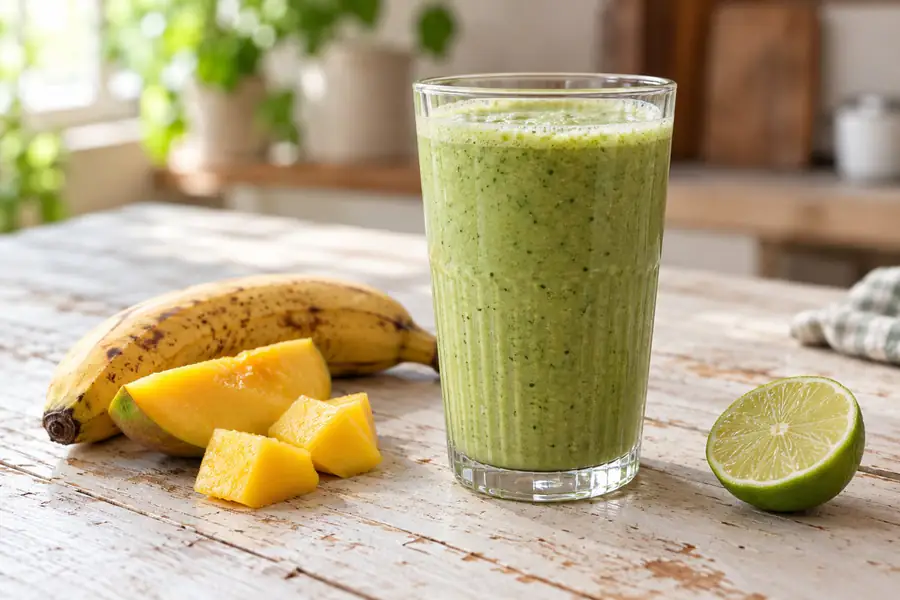
Banana and mango bring sweetness to gotu kola’s grassy, gently bitter flavour, while lime adds a fresh citrus edge. Made with leaf powder and oat drink, this smoothie is a fruit-led way to explore gotu kola when fresh leaves are not available.
Ingredients
- ½ teaspoon gotu kola powder
- 1 banana
- A handful of frozen mango
- A squeeze of lime
- 200 ml oat drink
Method
Blend
Blend ½ teaspoon of gotu kola powder with a banana, a handful of frozen mango, a squeeze of lime and 200 ml of oat drink until combined. Taste and adjust with more fruit or oat drink if the leafy flavour is too strong.